COMPUTER VISION DATASETS

Computer Vision Datasets

Visual datasets for AI systems that need to recognize objects, classify scenes, analyze human activity, interpret environments, and extract structured information from images and video.

Wavebreak Media provides rights-cleared image and video data for computer vision projects across object recognition, scene understanding, activity analysis, visual classification, and related perception tasks. Existing collections can be reviewed by subject coverage, visual diversity, metadata, and available rights documentation, with custom data options for projects that require more specific content or conditions.

Licensed Visual Data for Computer Vision Models

Computer vision models need visual data that represents the conditions they are expected to interpret in real applications. Relevant variation can include objects, people, environments, activities, viewpoints, scale, lighting, backgrounds, motion, and scene complexity.

Wavebreak Media provides licensed image and video data that can be selected or curated around defined computer vision requirements. Existing collections can also be supplemented with custom-produced content where a project requires more specific subjects, environments, visual conditions, or coverage.

Computer Vision Dataset Types Available

Computer vision projects can require different combinations of visual formats, subjects, and environmental conditions depending on the model objective.

  • Image datasets for computer vision
  • Video datasets for computer vision
  • Lifestyle and everyday environments
  • Extracted video frames
  • Business and workplace environments
  • Technology and device-use content
  • People and human-centered visual data
  • Retail and shopping scenes
  • Scene and location-based visual collections
  • Objects and products
  • Healthcare and wellness imagery
  • Custom visual datasets built around defined computer vision requirements

Image and Video Data for Computer Vision

Computer vision models can work with still images, video, extracted frames, or combinations of visual formats depending on where the relevant information appears.

Still-image datasets are appropriate when the model can make the required visual decision from an individual frame, such as distinguishing categories, recognizing an object, or interpreting a static scene.

Video becomes more important when understanding depends on changes over time. Motion, action progression, human-object interaction, camera movement, and temporal continuity require sequential visual information rather than isolated images.

Projects can therefore be built around one visual format or combine still and temporal data where both forms of information are relevant.

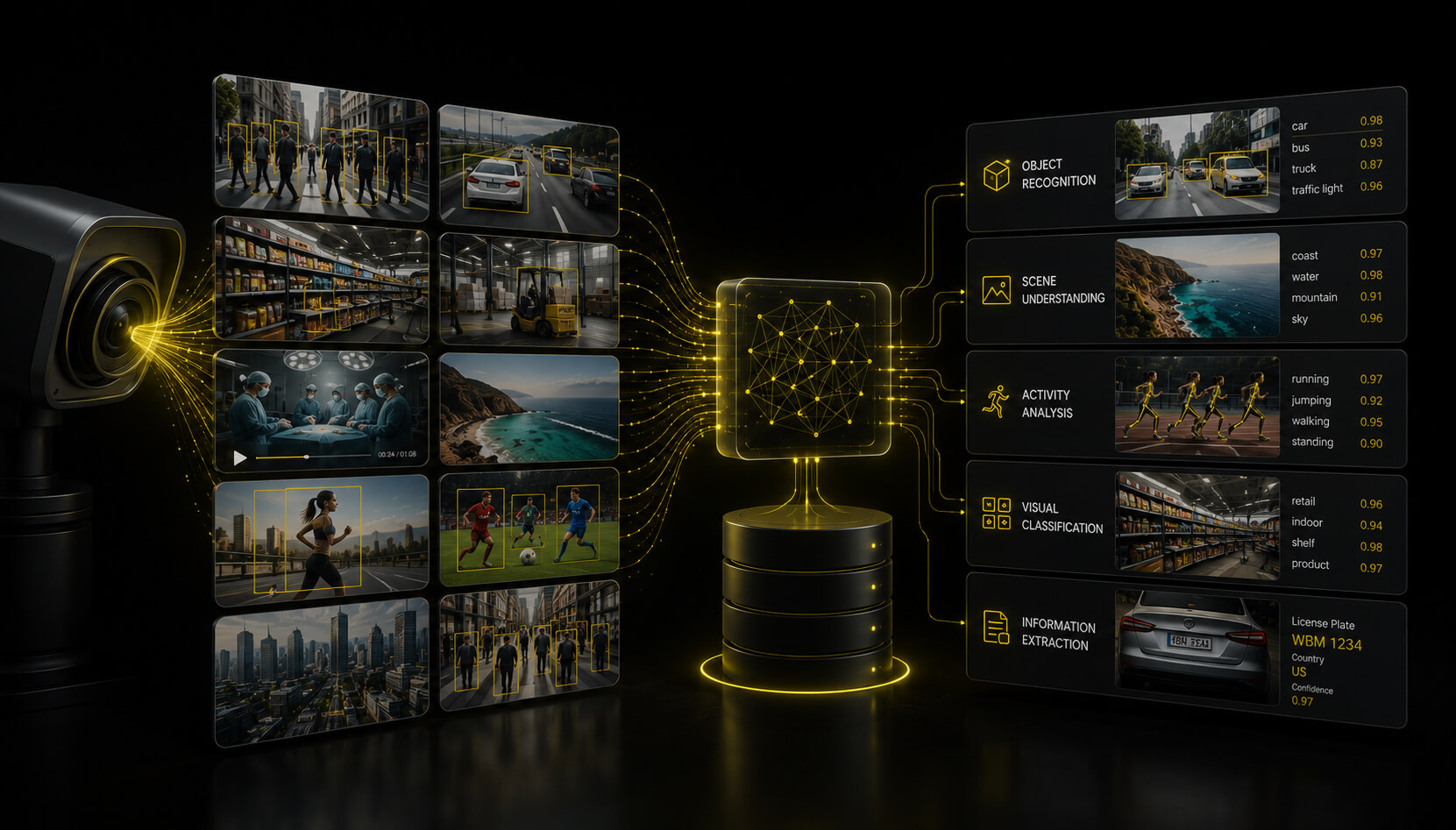
Camera-sourced imagery processed through a vision model into object recognition, scene understanding, and classification outputs

Preparing Computer Vision Datasets for Model Workflows

The structure of a computer vision dataset should reflect the task the model is expected to perform. A project based on image classification may require organized visual categories and consistent metadata, while video-based analysis may depend on clips, extracted frames, sequence information, and additional context describing the content.

Depending on the dataset and buyer requirements, delivery can include:

  • Still images and video files
  • Keywords and structured metadata
  • Secure dataset packaging and transfer
  • Extracted video frames where needed
  • File and folder organization aligned with the project
  • Custom dataset structures for specific computer vision workflows
  • Visual categories and labels
  • Available release and provenance documentation
  • Captions and descriptive fields
  • Usage documentation

Computer Vision Use Cases

Computer vision datasets can support AI teams working on visual perception, visual recognition, media understanding, content analysis, and commercial model development.

  • Image classification
  • Object recognition
  • Scene classification
  • Human activity recognition
  • Product recognition
  • Retail shelf and shopping analysis
  • Healthcare visual analysis
  • Workplace and business environment recognition
  • Visual search and retrieval
  • Model evaluation and benchmarking
  • Dataset enrichment and expansion
  • Enterprise AI product development

Dataset Options for Computer Vision Teams

Different computer vision teams need different dataset structures depending on model use case, content category, visual format, metadata requirements, release requirements, and delivery timeline.

Browse visual dataset categories

Review available image and video dataset categories across people, business, healthcare, retail, lifestyle, travel, technology, products, and other commercial visual collections.

Browse Dataset Library

Request use-case-specific datasets

Source datasets for object recognition, human activity recognition, visual search, scene understanding, model evaluation, or other computer vision workflows.

Create a custom computer vision dataset

Define a custom computer vision dataset brief and let Wavebreak Media review production, curation, annotation, metadata, release, and delivery options.

Custom Dataset Creation

Why Wavebreak Media for Computer Vision Datasets

Wavebreak Media combines large-scale professional image and video production with the ability to curate existing collections and produce additional visual coverage around defined computer vision requirements.

We help teams build or source rights-cleared visual datasets that reflect the perception task, content coverage, and data structure required for practical computer vision development.

Frequently Asked Questions (FAQ)

Computer vision datasets are structured collections of visual data used to train, fine-tune, evaluate, benchmark, or enrich AI systems that interpret images or videos. They may include images, videos, frames, labels, captions, metadata, categories, release information, and usage documentation.

Available dataset types include still image collections, video and extracted-frame datasets, category-labeled data, metadata-rich datasets, and custom-produced visual data built around specific recognition or classification tasks.

Computer vision datasets cover a broad range of visual AI tasks, including classification, scene understanding, and video analysis. Object recognition datasets are narrower and focus specifically on identifying objects, products, or items within images or video.

Yes. Wavebreak Media can produce custom computer vision datasets built around specific subjects, environments, visual conditions, or model requirements that existing collections don't cover.

Yes. Wavebreak Media provides rights-cleared image and video datasets for computer vision projects, including object recognition, classification, scene understanding, and activity analysis use cases.

Image datasets are a subset of computer vision data focused on still visual content. Computer vision datasets more broadly can include image, video, frame, and metadata-based content across a wider range of visual AI tasks.

Yes. Depending on the project, computer vision datasets can include category labels, captions, keyword tags, and other structured metadata alongside the visual content.

Yes. Datasets are rights-cleared with available provenance and, where applicable, model and property release documentation to support commercial AI development.

Request Computer Vision Datasets

Tell us what type of computer vision dataset you need, including content category, image or video format, model use case, dataset size, metadata requirements, release requirements, licensing needs, and delivery timeline. Wavebreak Media will review available and custom dataset options for your computer vision workflow.

Selected Partners

Selected Wavebreak Media partners