LICENSED OBJECT-CENTRIC VISUAL DATA

Object Recognition Datasets for AI Training

License object-centric image and video data from Wavebreak Media's wholly owned archive for category classification, object recognition, visual search, and evaluation, or commission custom capture for defined objects, products, and viewing conditions.

Datasets can be curated by class or instance, viewpoint, scale, lighting, background, occlusion, object state, surrounding context, metadata, annotation requirements, usage rights, and delivery format.

Object Recognition Data by Task

Wavebreak Media can configure archive-curated or custom-produced image and video data for the required object identity, labels, visual coverage, and evaluation structure. For broader tasks, review our computer vision datasets.

Object Classification

Images or sampled video frames organized by defined object classes, with class IDs, inclusion rules, balance targets, and controlled dataset splits.

Instance and Product Recognition

Multiple views of the same object or product variant linked by instance or product ID, where matching archive coverage can be confirmed or custom-produced.

Object Detection

Contextual images or frames with class labels and, where commissioned, bounding boxes, polygons, or masks that locate target objects.

Fine-Grained Recognition

Visually similar classes or variants supported by hierarchical taxonomies, attribute labels, hard negatives, and explicit distinction rules.

Visual Search and Retrieval

Query and reference images organized with object IDs, similarity or relevance relationships, and gallery splits where specified.

Evaluation and Class Expansion

Held-out examples, underrepresented classes, negatives, and difficult viewing conditions selected against defined evaluation criteria.

Model Evaluation Datasets
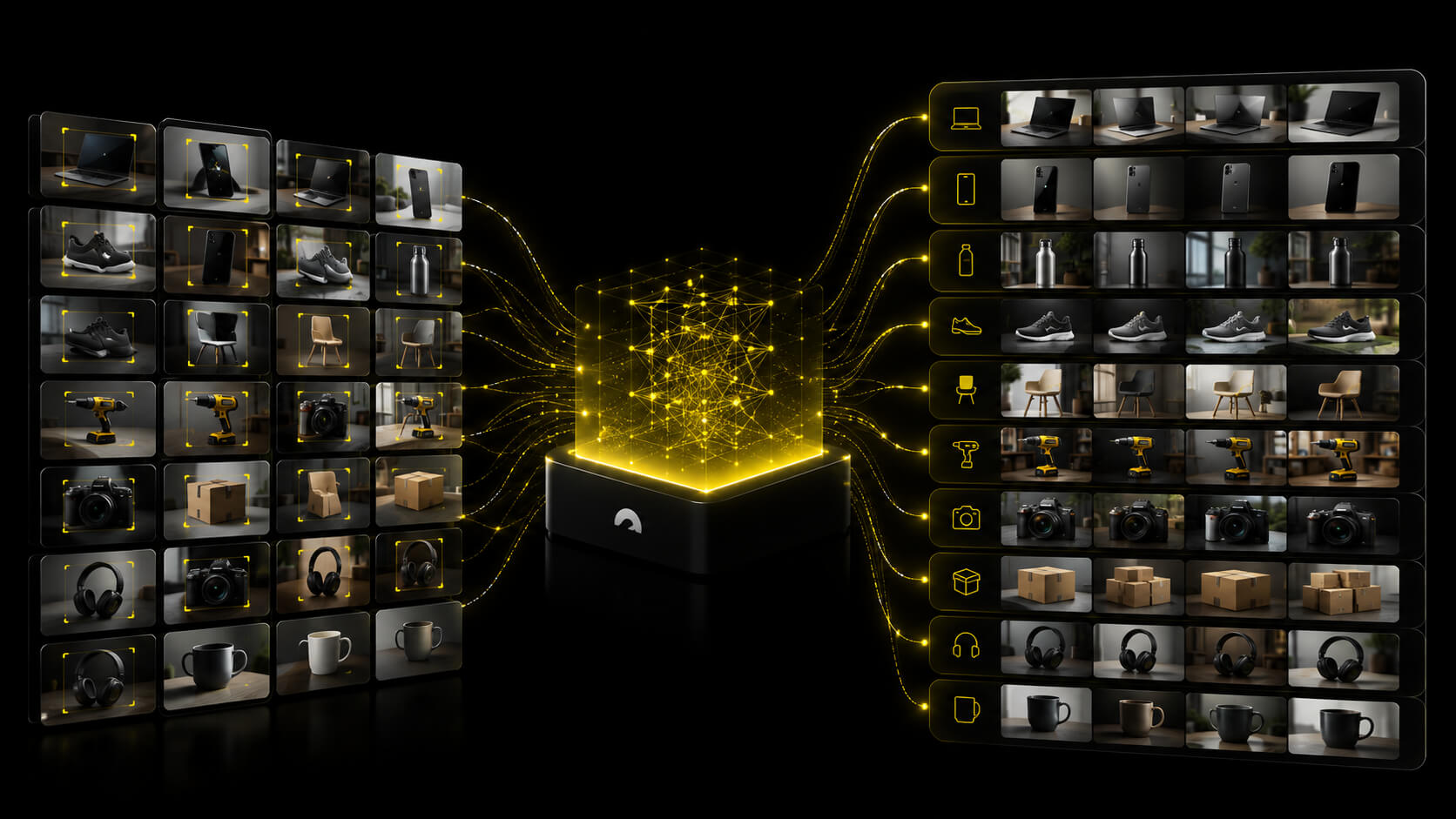
Object recognition workflow showing categorized images, object labels, and visual search results

Object Categories Available

Wavebreak Media can assess archive coverage and custom production options across the following object groups. Availability is confirmed against the required class, instance, and visual-variation depth.

Exact SKUs, branded packaging, product variants, controlled multi-view capture, and instance-level coverage are confirmed per project and may require custom production.

Consumer Products and Packaged Goods

Retail items, generic packaging, personal care products, and other consumer goods in isolated or contextual views.

Food and Beverage Items

Prepared food, ingredients, containers, tableware, beverages, and packaged items across domestic, retail, and hospitality settings.

Household and Lifestyle Objects

Furniture, appliances, kitchenware, personal items, cleaning products, and everyday objects shown alone or in use.

Technology and Electronic Devices

Phones, computers, displays, accessories, office technology, and consumer electronics across different angles and environments.

Tools and Workplace Equipment

Hand tools, office equipment, workshop items, and professional equipment where required class coverage is available or can be produced. Review the Forklift Images Dataset for an available industrial-equipment collection.

Sports, Fitness, and Travel Equipment

Exercise equipment, sporting goods, luggage, travel accessories, and mobility-related items in relevant usage contexts.

Image, Video, and Visual Variation

Wavebreak Media can curate image datasets for AI training, video datasets for AI training, or mixed collections around the viewing conditions required by the recognition model.

  • Viewpoint, orientation, and camera distance
  • Scale, resolution, framing, and crop type
  • Lighting, background, environment, and scene context
  • Partial occlusion, clutter, overlap, and object visibility
  • State, condition, color, material, and appearance variation
  • Isolated objects, objects in use, video sequences, and extracted frames

Labels, Metadata, and Dataset Splits

Selected object-centric assets can be prepared with:

  • Class, instance, and product structure - stable asset IDs, object IDs, class taxonomies, hierarchical categories, attribute fields, and source relationships.
  • Labels and annotations - image-, frame-, clip-, or sequence-level labels, object crops, captions, temporal segments, and spatial annotations where commissioned.
  • Coverage and split controls - class quotas, hard-negative rules, exclusion criteria, and grouping of same-object, same-shoot, sequence, adjacent-frame, and near-duplicate assets.
  • Packaging and delivery - agreed media formats, JSON, JSONL, or CSV manifests, versioned splits, checksums where required, and secure dataset delivery.

Object Recognition Dataset Options

Archive curation and custom production can be used separately or combined under one dataset specification.

Licensed Existing Collections

License a ready-made image or video collection when its object coverage, format, metadata, technical specifications, and available rights match the project.

Browse Dataset Library

Archive-Curated Datasets

Select a project-specific subset from Wavebreak Media's archive by class, context, visual condition, format, volume, and available metadata.

Custom Object Recognition Production

Commission new image or video data when the archive lacks required objects, instances, product variants, views, environments, or hard negatives. Capture, labels, releases, and acceptance criteria are defined before production.

Custom Dataset Creation

Why Wavebreak Media as an Object Recognition Data Provider?

Since 2005, Wavebreak Media has produced and managed an extensive image archive and more than one million wholly owned video assets. Its object-centric coverage includes products, tools, devices, equipment, and everyday items shown in professional and lifestyle contexts, including objects in use.

Projects can combine archive curation with controlled capture, project-defined labels or annotations, quality checks, and licensing for the selected assets and intended AI use. Available provenance and applicable releases can be reviewed before approval.

Review dataset licensing and compliance requirements before approving the scope.

Frequently Asked Questions (FAQ)

Not always. Existing assets may include descriptions, categories, keywords, and technical metadata. Task-specific IDs, bounding boxes, masks, or other annotations are confirmed or commissioned per project.

Yes, where source relationships support it. Exact instance, SKU, or variant structures may require custom capture when archive coverage is insufficient.

Yes, when spatial annotations are included. Recognition identifies a class or instance; detection also locates it using agreed bounding boxes, polygons, or masks.

Yes. Curation or production can include background examples, visually similar classes, neighboring variants, and images that resemble but do not meet the target definition.

Yes. Existing assets can cover suitable classes and contexts; custom production fills defined gaps in objects, variants, views, environments, or class balance.

Licensing is finalized for selected files and intended AI use. Available provenance and applicable releases can be reviewed before approval; permitted uses are defined in the agreement.

Request an Object Recognition Dataset

Send the target classes, instances or products; recognition task; required viewpoints, environments, variants, hard negatives, image or video format, volume, labels or annotations, split rules, rights requirements, and delivery format. Wavebreak Media will assess ready-made, archive-curated, and custom production options against the specification.

Selected Partners

Selected Wavebreak Media partners